
Shop
Repair Is Care: Building a Business for People, Not Profit
In 2023, I started dreaming up a small repair shop. A project that would enable me to give back to the community in a small, but meaningful way. I wanted the shop to be affordable, convenient and safe. There are a lot of repair shops and so many of them are run by cis white men who want $300 to replace an iPad charging port.
A lot of repair shops also stop their efforts at a certain point, quick to suggest a replacement product, and likely to give up on retrieving lost data past running one specific program. By mid 2023, I had found a shared space and started taking on a small number of friends and their connections as clients in a trial-run, establishing both an in-person and digital Prescence for my shop.
I opted to offer something more creative; I'd keep working with clients at a fraction of the cost as long as they were willing to let me keep trying. If I reached a point where nothing more could be done, I'd be straightforward with why I couldn't go any further in the repair process. This allowed me to gain practical experience. I quickly discovered that clients would rather take a chance supporting a fellow queer person than pour funds into a commercial chain. A welcome and heartwarming realization.
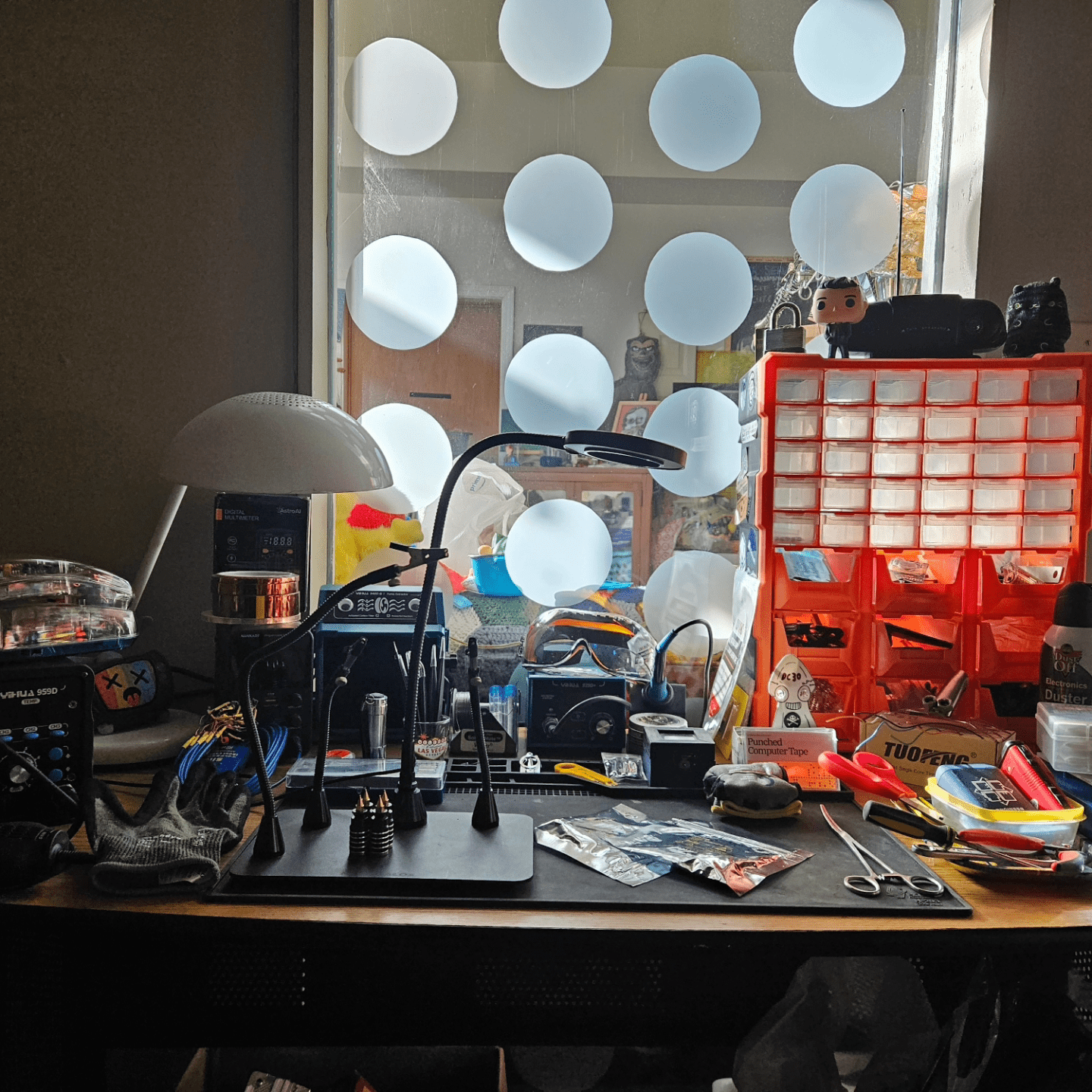
I built my shop slowly and funded almost everything entirely out of pocket. Tools that I didn't have, I covered myself. A client would only pay for the cost of parts and my time, and I'd investigate and fund whatever else was needed. That way, I'd have it for the next client.
This allowed me to slowly discover what equipment I'd need for a broad scope of repairs and filled me in on what sort of assistance the community was looking for. Clients were able to pay in a variety of ways, from cash to crypto, or trade a skill or service of their own to cover the repair. I also accepted a small number of repairs for free in exchange for the experience. If a client could not come to the shop, I'd come to them when I was able, making trips to houses and other small businesses.
My shop space also advertised itself as a mini makerspace of sorts. If someone came in interested in learning, I would walk them through repairing their own item or explain the steps I would take to fix it, and they could use my shop's equipment while in the space. There was no pressure.
I understood that many individuals in need of service in the community were often rushed off their feet with their own busy lives and frequently did not have the spoons or time to learn themselves. My clients were, by and large, other queer people. Mothers with children or teens who were short on time, individuals with chronic pain or issues with fine motor skills who knew how to perform a repair but were unable to perform the steps themselves. That's who my shop was designed and built for.
From time to time, I also made it my mission to help out other local small businesses, frequently accepting work for an exchange of service and the opportunity to advertise. Often, for little to no pay offered for my work when others with a similar skillset charged a hefty fee for less of a personalized experience.
In 2025, I parted ways with the shop I shared space in and started the journey of hunting for a new shop space.
